A wider world of stories
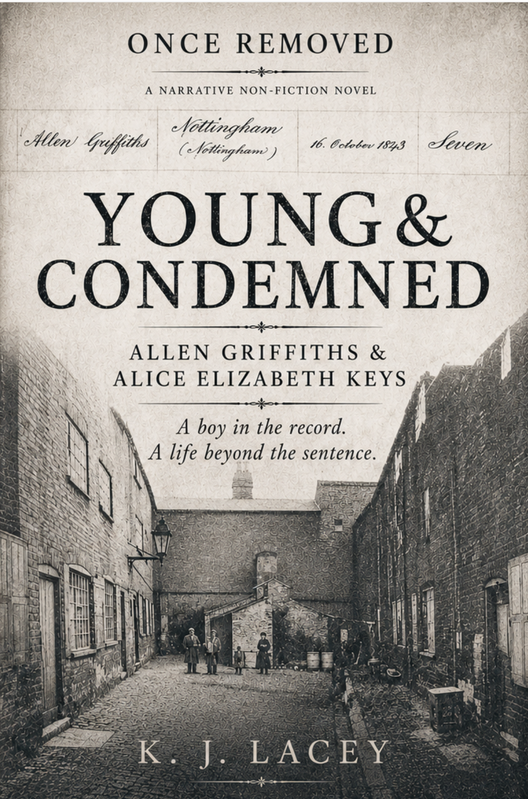
A boy sentenced to transportation. A daughter sent across the world after her father. A condemned woman who initially refuses the conditions on which her life will be spared. A family leaving Cornwall’s mining communities. A carpenter whose changing names leave different versions of his life scattered through the records.
The planned stories reach from the late eighteenth century into the twentieth, connecting Britain, Ireland, North America, Australia and New Zealand.
Some journeys begin in a courtroom. Others begin with a passage booked, a promise of employment, a relative overseas or the prospect of gold. People travel alone, with children, or ahead of partners who must wait to follow. For those born in Australia, the story begins within the world their parents and grandparents have left them—with opportunities, obligations and difficulties of their own.
Further stories reach back into the early penal colonies of New South Wales, Norfolk Island and Van Diemen’s Land. Petitions, trials and punishment records preserve moments when survival depended on decisions made by strangers. Beyond those moments lie the harder-to-record years of work, marriage, parenting and trying to establish a household. Mary Ann Parry’s story brings a free woman into this early colonial world, where her choices unfold alongside the authority governing the people around her.
The collection also follows families who migrate in search of a livelihood. From Devon, one family travels to New Zealand before some of its members move on to Victoria. From Cornwall, another leaves a mining community for a future involving goldfields, market gardens and the growing outskirts of Melbourne. A Scottish agricultural labourer and his wife raise their family through years of railway work. Their journeys continue long after the ships have landed.
Work gives these stories much of their texture. There are carpenters and cabinetmakers, miners, servants, agricultural labourers and publicans. An inn in Bothwell becomes a place of business and community life. Houses along a Collingwood street trace a builder’s changing circumstances. In timber districts and country towns, families follow employment, take up land and begin again when a livelihood fails or a household changes.
Women’s lives run through the whole collection. They earn wages, raise children, manage property, endure bereavement and form new relationships. Some cross the world with their families; others hold households together while a husband is absent. Their decisions can be difficult to recover from records that identify them chiefly as someone’s wife or mother. The novels give them space as people with lives and concerns of their own.
The later stories move into Australian-born generations. Parents’ histories become children’s inheritances, sometimes remembered clearly and sometimes obscured by silence, conflicting accounts or a changed surname. A daughter’s story continues beyond the point where her father’s ends. Families separate, reunite and form new connections. Familiar places become the setting for very different lives.
There is affection, humour, pleasure and ambition here, alongside loss and conflict. Family connection does not make every subject admirable. Some cause harm; others tell stories about themselves that the documents complicate. K. J. Lacey writes as a descendant and clinical psychologist, interested in people’s relationships and contradictions, and in the choices available to them within their particular circumstances.
Behind the novels are traces of ordinary life as well as extraordinary events: a shipboard diary, a letter from home, a missing-person advertisement, a disputed payment, the rooms listed in a rate book, a will or a few words written in a family Bible. These details help build the worlds of people who were living forward, without knowing how their stories would end.
The novels tell the story. The website shows the evidence. Companion pages open the records behind the books, distinguishing documented events from inference and imaginative reconstruction.
Further novels are being researched and developed. Titles and publication order may change.